At the recent AGM we discussed a composting scheme for plot holders and it was thought that the lack of access to our field goes against having a shared conventional system of bays & turning from one to the next.
Following some there is a proposal to have a shared rotary composting system in the middle area of the field, this is a practical idea as it has no hard standing for the composter which can be moved if necessary.
You’ll find some further information below for your review – please fill in the questionnaire we have sent out with the New Year letter so we can not only assess support for the rotary scheme but begin to encourage members to compost their raw vegetable waste & keep more fertility on our allotments.
The Jara Composter
In the harsh winters of Sweden there are up to 6 months of freezing cold temperatures which make it nearly impossible to compost using traditional methods.
In 1989 a Swedish engineer named Jonathan Ramious developed the Jora Composter to fill a need for composting through these harsh winter months.
Homeowners wanted to have compost they could use in the springtime. The months of spring and summer were simply not long enough to accumulate enough compost to use all year round.
Jonathan invented a rolling tumbler that could easily mix old waste with new. Like today’s Jora Composter, this one had two separate chambers, however early Jora composters were assembled onto a wall with hooks . The Composter was made from galvanized steel and built sturdy enough to withstand the harsh winter months.
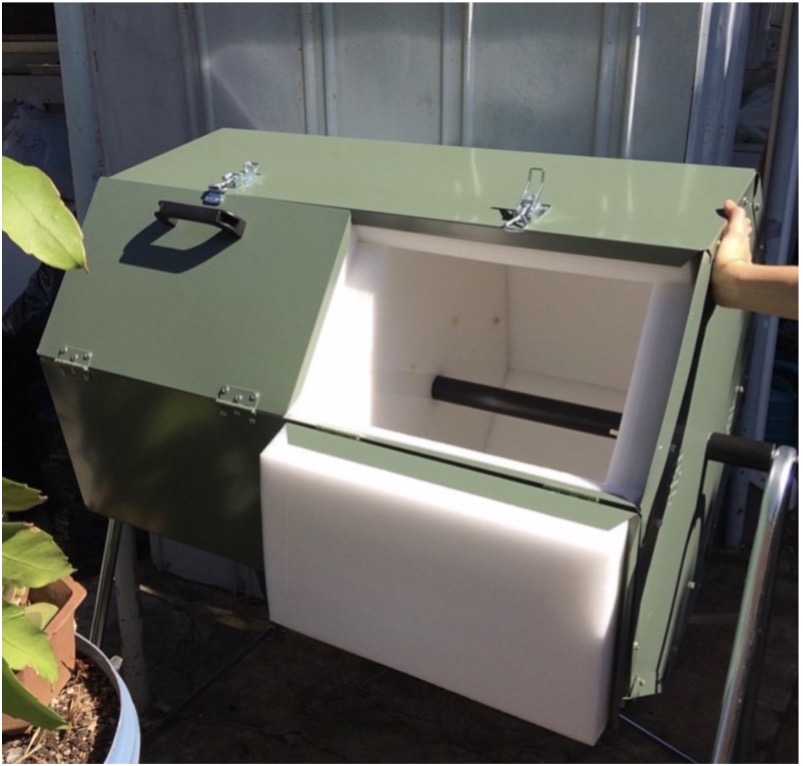
Insulation inside the ante provided the big advantage. This high density food grade insulation proved to be very effective in maintaining temperatures high enough to compost kitchen scraps, even if the weather outside was extremely cold.
When you see it working you can’t help but be amazed that it can be sitting in one foot of snow and when it is opened – steam comes out.
Year round composting had become accessible to everyone.
People could now able to compost their kitchen waste during the winter months. The composter was so efficient that you could even compost protein like meat, chicken and fish etc. This was certainly a new and exciting invention, one that could make a huge difference to our fragile environment – a lot less waste could be going to landfills, and our gardening soil could become rich with nutrients again.
Composting
Composting occurs at temperature intervals of+2 to +78C.
Different micro-organisms work at different temperature intervals.
Higher temperatures give a higher degree of hygienic composting, and are, therefore, more favourable.
With equal moisture distribution and oxygen configuration plus with continued addition of waste, the temperature will rise to 65-75C. You don’t have to buy a thermometer, as you will see the steam rising from the contents.
Two Compartments for Maximum Results
The digester is divided into two compartments, this means that you can stagger production and always have a ready supply of compost!
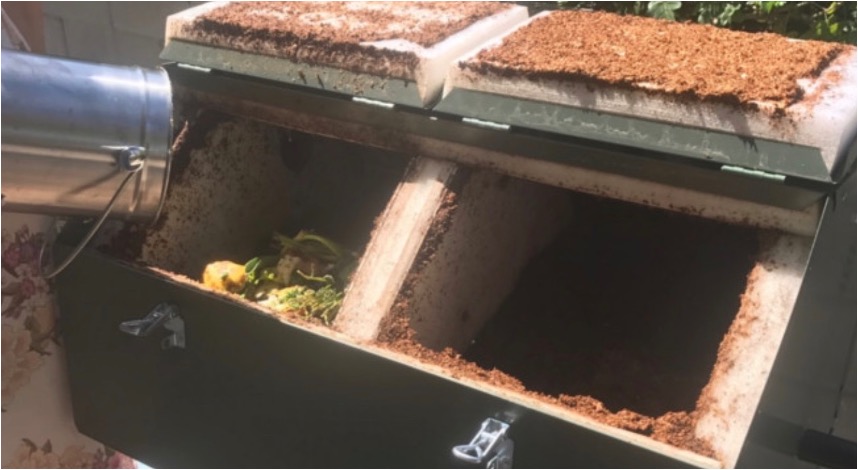
This allows you to fill one chamber while the compost in the other chamber matures. Once the chamber being filled cannot hold any more, the mature compost in the other chamber can be emptied and the cycle can begin again.
Looking at the photo you can see that it is time to begin filling the chamber on the right while the chamber on the left continues composting to maturity. When the chamber on the right is filled to capacity, it is time to empty the chamber on the left, which will provide you with excellent fertiliser for your garden.
Insulated to Contain More Heat
The composting process generates heat from the microorganisms interacting to break down the waste material inside the compost tumbler.
The ability to contain heat means more interaction among microorganisms and therefore more heat, which amounts to faster, more efficient composting.
The heavy-duty insulation inside the Jora compost tumbler allows for a high internal temperature, facilitating the interaction of more microorganisms, bringing the temperature above 160 degrees Fahrenheit. This ability results in the quickest and most efficient composting experience possible.
Because the heat being generated is derived from the microorganisms working together to break down the waste, and not from the temperature outside or the sun, the location you’re in is not a factor. Because of the unique type of insulation built into the Jora Compost Tumbler, which is an integral part of the design, you are able to compost through the cold temperatures of winter, long after other composters have stopped working.
Features & Benefits:
‘Continuous-use’ dual chamber composter
Durable, rust proof galvanised steel construction
Holds 7.5 – 14.2 cubic feet (60 – 106 gallons) of compost
Operating capacity: 4-7.5 gallons per week
Side vents provide aeration, and speed up composting
Reduces or eliminates odours
Fully-enclosed and pest resistant
Rodent proof – elevated so rodents cannot access waste
Set up to be either freestanding or mounted
Construction:
Exterior: galvanised, powder-coated steel panels
Insulation: 2.16″ polyethylene – a stable, non-toxic plastic
Stand: galvanised steel
Stainless steel hardware
These units come in a box and need to be assembled however we have a great Youtube Video on our channel about how to assemble them which is definitely worth watching before assembly.
Rotating Compost:
Easy to rotate – simply turn by hand after adding waste
Fresh waste is brought into direct contact with decaying waste
Adds air to the mixture, providing oxygen that is vital for the process
Composting with Joraform is a straightforward process which will produce rich crumbly garden compost in 6-8 weeks.
The Joraform is intended for household and garden organic waste but will not handle large quantities of grass cuttings which can overwhelm the composting process.
Organic waste is added to one of the chambers on a daily basis, using a variety of materials as they become available.
The correct balance of green and brown waste materials needs to be maintained in order to support the bacteria and micro-organisms needed to break down the waste material.
Green Waste: Fruit and vegetables, kitchen scraps and peelings, grass clippings and soft, leafy plants.
Brown Waste: Leaves, prunings and shredded hedge trimmings, woodchip, bark and shavings, shredded paper, straw and plant stems.
Load the composter with a ratio of 2:1 brown to green. Add wood pellets if not enough brown waste is readily available.
Rotate the composter daily to mix and aerate the waste, 2-3 turns is usually enough.
Stop filling when the chamber reaches the half way point. Close the chamber and allow the waste to compost for about 6-8 weeks.
In the meantime start and continue loading the second chamber in the same way. When this reaches the halfway point close the chamber and allow to compost.
Continue to rotate the composter daily.
Ensure the compost has an adequate airflow by varying the composition and texture of the waste content.
Useful air pockets can be created by using twigs and crumpled card. Check that the side vents are clear, inside and out.
Keep the mixture moist but not too wet, again by varying the mixture. Add wood pellets if the compost is becoming wet and slimy.
During the filling process it may be useful to add a small quantity of completed compost to the mix to boost the bacterial content.
If it appears that the composting process is stopped or slowing down this is generally caused by too much carbon content, remedy the balance by adding nitrogen based waste.
If the mixture has developed into a stinky, slimy mess this may be caused by excessive nitrogen.
Add carbon based waste to achieve the correct balance.
Since the chambers are sealed there is no threat from rodents and other wildlife.
The Joraform Compost Tumbler For Faster Composting – ‘Big Pig’
£545.00
Dimensions of Composter: 91cm wide x 76cm deep
Dimensions of complete unit on Frame: 130cm high x base of frame 114cm wide x 72cm deep
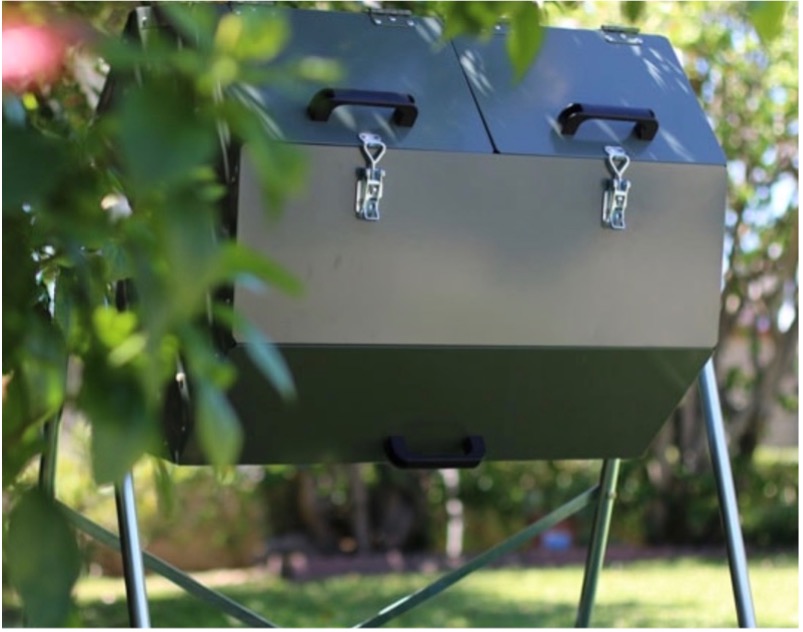
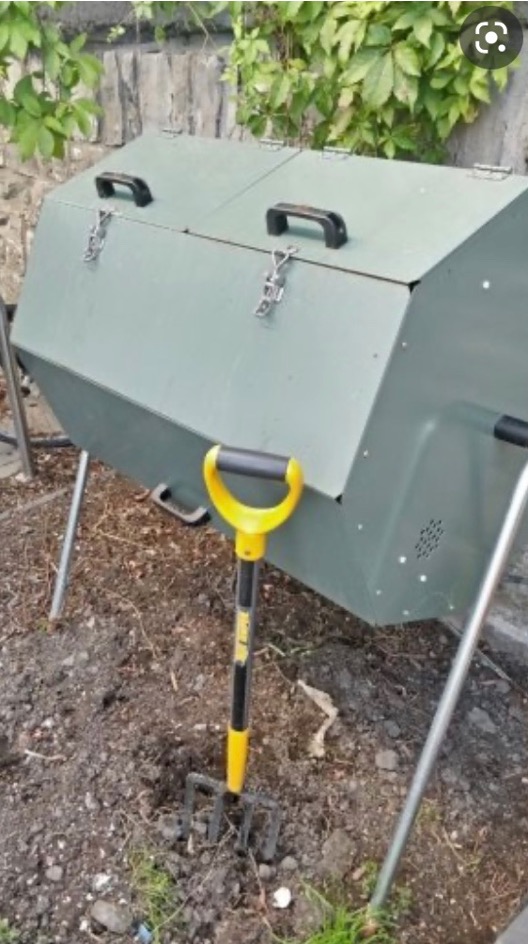
The Jora rotary composter is also known by its technical name JK270, or more affectionately as ‘Big Pig’.
JK400 Joraform Compost Tumbler
£1,095
Dimensions of Composter: 139.7cm (55in) L x 81cm (32in) W x 134cm (53in) H
 bonfirehillallotments